Tuesday, March 24, 2009

all is not lost...

Currently, I am staring out the window at what appears to be a windy day. Also, I'm half watching Twin Peaks and writing this. The past few days I have been pretty sick...nothing serious (damn sore throat, fever, now congestion); I do not like getting sick. This is where I do not provide you with content, but where I provide myself with something else. Maybe something to pass the time. I don't really know.

Yesterday I came home and Courtney was sitting by the fire with her computer typing what I assumed was another story for her book. Indeed it was. She wrote a book with her mother a couple of years ago and they hope to one day have it published. She has written quite a bit before that as well, but I think these particular stories are different. The content involves events she remembers from what could be described as a quirky, but loving and interesting childhood. She tells me anecdotes from those times occasionally and I always find myself very engaged (even if I'm doing something else at the moment) and always entertained.

She has read me a few of the stories and they are quite amazing. The characters and activities are so incredible it's hard to believe sometimes that they are of real history. Her life was so interesting. Her life is so interesting. She is a teacher, musician, artist, actress, chef, athlete, scholar, journalist (at one time), sex symbol, etc...this list could go on. It's amazing that so much could be packed into such a small package; she's only like 4'11" tall.

I'm kind of a pain in the ass when I'm sick and she always just rolls with it. This latest episode is no exception. She's good like that. Even though she's the actress of the house, I am definitely the drama queen.

I know she'll read this and smile, but this isn't for her. She already knows this stuff. She knows I love her, blah blah blah. It isn't really for me either. I don't exactly know what it is. Not that it matters.

And here we are

Sunday, March 22, 2009

Just a Thought

After my celebration of J.S. Bach's 324th birthday, I began to remember some controversy concerning the Prelude I in C Major, BWV 924(a). Controversy is rarely without a protagonist and this controversy would not be possible without the help of well known theorist Heinrich Schenker.

Schenker developed a method of musical analysis justly named Schenkerian Analysis and touted this method as the last word for analysts and critics of tonal music. In short, Schenkerian Analysis places a hierarchy on pitch class and harmony, exposing the important details of the piece through reduction.

Schenker spent many hours analyzing BWV 924 constantly referring to it as either a draft of another work or even dictating that it was written by J.S. Bach's son Wilhelm Friedmann Bach. The fact is that J.S. Bach wrote these works (included in the Well-Tempered Clavier) to aid his son in learning not only to play the keyboard, but to also tune it himself (see this great analysis I found concerning Bach's tuning using BWV 924). Schenker went so far as to omit pitches from BWV 924 and in the early 20th century during which he had a great hold over the world of concert music, his "corrections" were eventually published as accurate and used instead of the original score.

Schenker failed to realize that instead of what he noticed as erroneous harmony in the middle (I must mention that it is in the exact center of the piece; some sort of palindromic puzzle?) of the Prelude that Bach was also giving lessons in counterpoint to his son. Schenker decides that omitting the leading tone in mm. 22 and 23 (this is from memory folks; measure numbers could be slightly off) would give him the ability to analyze the harmony as a II chord rather than an unresolved leading tone. Schenker does NOT realize, however, that Bach was using a canon at the 7th to modulate quickly to a new key. This is precisely where Schenker did not know about Bach's tuning methods (see link above) which augmented the frequencies of the thirds for all keys in order to modulate very quickly and smoothly without notice from the listener. Bach also used the wolf tone to create a more uniform tuning system, closer to equal temperament, but more closely to Pythagorean and Just intonation. Schenker was working in a strictly equal-tempered mind frame that limited his analysis.

Rather than turn this into a long analysis, I will end with this:

Schenkerian analysis is not to be taken lightly as it is respected to this day as a very important technique in musical analysis. But I do not agree with his idea that analysis (especially his) can be used to critique the validity of music and it's author.

Saturday, March 21, 2009

324 years young

Today is Johann Sebastian Bach's 324th birthday and I thought it only appropriate to give him a little tribute on the Fractal Mechanism.

Nearly two years ago my mother gave to me for my birthday a set of 100 cd's containing just about every piece of music J.S. Bach wrote during his lifetime. I call it the Bachset. It is the only thing I have listened to consistently for the last four months and have yet to finish. I occasionally find myself repeating certain tracks two or sometimes even three times because I just cannot believe what I am hearing. Bach had all of the great characteristics of a true artist: inimitable style, originality far beyond his years, influence (past, present, and future), technique, humility, and a relationship with the art form that rivals having a Siamese twin.

That said, Bach did not look at music as an art form, but as an offering. He was a very religious man, but I like to think that he was not just creating art for God, but for what he may have thought of as God's people. Maybe that is one such definition of the word ART itself, but Bach most likely did not acknowledge the word for the work he created on a daily basis.

Art has a strange history in education: eras are almost always carried by one or two figures of the time and Bach was no exception. Bach practically carried the weight of the Baroque on his own back, for without this one man, Baroque music may have not have moved into the Classical era so smoothly. Art of the Fugue alone was free reign for the composers of the Classical period to create new sounds and techniques with an ancient form as a template. American composer Charles Ives wrote a piece in the early Twentieth Century simply titled Fugue in Four Keys.


subtext:

Music is about 50 - 100 years behind the other art forms when speaking of the named period cultures. Baroque music was dated from around 1650 to 1750 where the Baroque period in history was more like 1600 to 1700.


A short story:

Carl Philipp Emanuel Bach (Bach's second eldest son) worked for a time under the King of Prussia, Frederick the Great. King Frederick (an accomplished flautist and composer) was quite taken with the abilities of C.P.E. Bach. One night at what one could assume was one of many drunken gatherings in the King's Court, Bach stated in so many words "if you think I'm great, you should hear my Dad". With that, the King sent immediately for J.S. Bach to visit and display what a true genius he was. During the ceremony of arrival for J.S. Bach, an attempt by the King to separate the generations (Bach was 62 or so and the King was about 35) he gave Bach an extremely chromatic theme he had been pondering over for sometime that was supposedly impossible to use in any true composition and possibly presented to Bach with a more malicious intent. It was to be performed on a new instrument: the piano. Bach sat down and began to improvise a three-part fugue on this theme immediately and quite successfully. Being quite the instigator, King Frederick asked Bach if he could improvise a six-part fugue on the same theme. Bach denied performing like such a monkey and instead composed many variations on this theme including a piece that contained a flute part that was way beyond the King's abilities, in part to show the King how it is really done. This piece was sent to King Frederick and became Bach's well known Musical Offering.

Happy Birthday, Maestro.

Thursday, March 19, 2009

Full Metal Alchemists of Sound

This is where I provide you with some more excellent content:

A few years ago I watched a BBC documentary called Alchemists of Sound about a collective of musicians, artists, and engineers called the Radiophonic Workshop. Put simply, their job was to create sounds and musics for the BBC and all of their content on the television and radio. Their output resulted in some of the most interesting art of sound on the airwaves including the theme for the classic Doctor Who series.

Side Note:

Delia Derbyshire who did the electronic realization for Doctor Who (the version one hears on the show) is so dear to me (though I never knew her) that I named my eldest cat after her. I feel as though she is not only on of the greatest musicians/electronic musicians and composers, but that she is also quite under appreciated as such. Her contributions to the world of electronic music should never be overlooked: she was a master of tape manipulation and could achieve sounds so original from a means that was so unorthodox, especially for the time (sampling).


Below is the documentary in 6 parts in a format that you can hopefully view:

Alchemists of Sound: 1
Alchemists of Sound: 2
Alchemists of Sound: 3
Alchemists of Sound: 4
Alchemists of Sound: 5
Alchemists of Sound: 6

Enjoy!

Tuesday, March 17, 2009

Beats and Geeks

A few months ago I decided an attempt to make something already pretty cool into something amazing was in order. Many years ago in Boston, a drummer friend and band mate gave me this "toy" you see below:


This little 4 pad drum was sold by Synsonic (Mattel) in and around 1982 and marketed mostly to kids. There were also various accessories available (kick and hi hat pedal) which I did not have.

Using it in a handful of live situations made me realize it needed some more control. After doing some research, I discovered a great site where folks discuss modifications they've accomplished and any general information about this little gadget. Below are some photos I took of my modifications which I housed in an old printer selector box and connected to the pad via a 25 pin serial connector:


Description:

upper left: TOM 1 - first toggle is an impact mod that increases the impact gain. the pot in the middle modulates the decay. the toggle on the right combines the snare and tom sound and is only activated when the snare pad is hit.

lower left: SNARE - the first pot modulates the decay. the toggle in the middle increases attack gain. the second pot is a tone pot that increases the high frequencies generated by the snare.

upper right: CYMBAL - the pot modulates the decay. the toggle increases the lower frequencies of the snare sound.

lower right: TOM 2/BASS - first pot modulates the decay. the toggle increases attack gain. the third pot modulates the intonation which is what i will use as a "kick drum"


Rather than going into too much detail posting schematics and whatnot, I've posted some sound bytes from each pad with a small description of what you are hearing as each specific sample progresses:

SNARE: begins with increased attack mod -> "tone" fluctuation -> decay sweep

TOM1: increased attack -> tuning (original feature of toy) -> decay sweep

CYMBAL: decay sweep -> "tone" fluctuation (on a toggle switch)

TOM2: increased attack -> tuning (my own mod) -> decay sweep


In the future I hope to build a kick pedal and eventually a hi hat pedal that would connect to my break-out box.

If you would like more tech info, I would be glad to create it and send it to you.

Sunday, March 15, 2009

More From Last Night

As promised, below are two links to some tracks from a live recording I took last night at the Toughcats extravaganza. The first song is one that Courtney and I wrote a few years ago called Die Schlange und Die Mädchen about a woman who marries a snake and performed last night with the boys. The second is a new song that Joe Nelson wrote that I love called Grease Monkey. It has yet to be released and I'm not even sure if it will last long here because of that, so enjoy while you can. I understand it will be released on their next record.

Die Schlange und Die Mädchen

Grease Monkey

A Very Long Day

Yesterday:

Courtney and I set off on a busy North Haven adventure yesterday starting with an early morning at the annual Town Meeting. As the secretary of the Planning Board, Courtney was somewhat obligated to go while my motives were a bit different. My obsession with recording sounds does not stop at car horns and footsteps; it also includes what could possibly be audio gold that is a town meeting. Unfortunately, the days of olde are gone at these things. Apparently there used to be knock-down drag-outs at the meetings years ago. Now everyone is mostly civil and after sitting through nearly eighty articles to be motioned I was quite bored. Needless to say, this is probably how town meetings should be organized. I also setup the wireless microphone and PA system (which led to a couple of great feedback incidents; music to my ears).

Now the LOVEFEST:

After the not-so-exciting Town Meeting, Courtney and I headed to the Waterman's Community Center where we had a 2.5 hour (or so) rehearsal with some of our favorite folks The Toughcats. The Toughcats are Joe Nelson, Colin Gulley, and Jake Greenlaw...three of the best people we have met since we moved to Maine almost four years ago. These guys are incredibly talented musicians and have helped us with projects that would never have been otherwise possible (ie, the Milkman Ballet) and they constantly put out some great music.

I wouldn't place their art in any one category, but most folks would probably call them a bluegrass group though they are so much more. These guys have amazing artistic instincts and their musicianship is second to none. We would not do half of the things we have done out here without them. I could go on and on about Joe, Colin, and Jake and perhaps I will in a future entry.

More on this later.

After a brief stint at home (Courtney cooked, I took a nap, stoked the stove), we drove over to our friends' baby shower at an incredible and ancient farmhouse owned by another set of great friends. Courtney made Gougeres that were the hit of the party. The house has been very well maintained in it's original state (other than the normal renovations a two hundred year old+ farmhouse requires). Many rooms separated by maze-like walls and a sometimes disorienting layout. This is a good thing, though probably difficult to heat. Bill Bartovics (one of the owners) gave me a great deal of guidance and parts in repairing a bicycle I found at the town dump (below). I still use this bike now that it is in great working order.


On to the Toughcats performance at the Waterman's Community Center (hence the 2.5 hour rehearsal). Courtney and I performed a couple of songs with The Toughcats: One song we wrote called Die Schlange und Die Mädchen and one ABBA song called Knowing Me Knowing You. Courtney also took part in their usual Busby Berkley-esque introductions while I did sound and lights. I also recorded the entire show (audio only) and will post some highlights in the future.

After Party ---> Absenthe ---> Sleep


The Boys

Friday, March 13, 2009

Black and White Friday

I thought it appropriate on this thirteenth Friday of March 2009 that I expose you to the F-List, a new podcast produced by myself along with cohorts Seth Macy and Elisha Brown.

The F-List is essentially a motley crew sitting around my studio blabbing into microphones about extremely bad movies that we watch/have watched. The format of the show is quite loose, but we all discuss a common film that we have assigned ourselves weekly and then discuss others that we have watched in the past or present. Visit the link above and have fun.

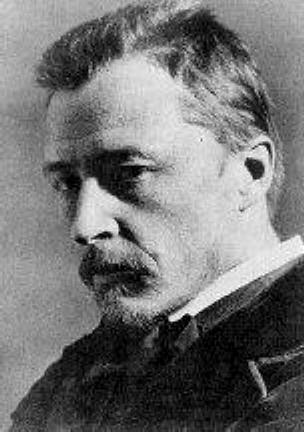
I should also mention that this 13th of Friday is the birthday of Austrian composer Hugo Wolf. I won't say much about him mostly because there is not much to say that you couldn't read on Wikipedia or something. He died young and composed some great music. His songs (for which he is most famous) are intense and beautiful and are completely underperformed works of true art. He did not write much music (compared to his predecessors anyway) in his short life as he died of syphilis at 46 or 47 years old and most of his creativity was ruined by his intense depressions that he went through quite frequently.

Do yourself a favor and give his music a listen, especially the lieder.

Maestro

Thursday, March 12, 2009

v.2 Complete With Cookbook

Server issues have been resolved. All links should work (the ones from my server anyway).

Back to the content:

Yesterday I found the cookbook you see below at the town dump:


First of all, the book is bound in WOOD and LEATHER with a very unique burned and painted image on it (as you can see above). Published in 1936, it contains recipes such as "Kennebunk Pickle" and "Clam Omelete" where most of the ingredients could almost be assumed and are obviously "New England".

An entire section of sauces really caught my attention and here is one I thought sounded interesting:

HARD SAUCE

1 cup powdered sugar
1/3 cup butter
1/4 cup wine
nutmeg

Cream the butter and add the sugar slowly, beating all the time. Add wine drop by drop and beat well. Before serving sprinkle top with grated nutmeg


I believe you can still find copies of this book used on eBay and even possibly Amazon though I doubt you'll find this one-of-a-kind binding.

Server Issues

I'm having some trouble with my web server that I am trying to resolve as quickly as possible. Some of the links below won't work for a couple of days at most so if you NEED them I can send them to you directly. Just send me an email: billtrevaskis at gmail dot com.

Wednesday, March 11, 2009

Mercury Theatre

It was brought to my attention by me that my additional comment in the previous post may not be clear to some regarding Orson Wells.

HERE is the radio broadcast in which Orson Wells unknowingly confuses the nation in 1938 about an alien visit to earth.

Tuesday, March 10, 2009

So, This is Why You Came...

Earlier today I digitized some examples that originally came on vinyl to supplement this book:


below is the audio that came from these two extremely floppy discs:

Side 1
Side 2
Side 3
Side 4

The book was written by a man named John Robinson Pierce who was a professor at Stanford University in Engineering and who also had a very prominent career at Bell Laboratories where he not only helped develop some of the first satellite communication techniques (Telstar 1) but also a great many discoveries in psychoacoustics and computer music. One such discovery was a musical tuning system that is now called the Bohlen-Pierce Scale (Heinz Bohlen had previously made a similar discovery which was expressed in just-intonation).

John Pierce also had a friendly relationship with science fiction author Sir Arthur C. Clarke. In 1963, Pierce invited Sir Clarke to a convention featuring some of the first computer generated music. One such presentation displayed the first talking computer. Towards the end of the presentation, the computer sang a song called "Daisy (Bicycle Built For Two)" that Clarke and film maker Stanley Kubrik later used in the film 2001: A Space Odyssey. Pierce also created a scenario in the film where an orbiting picturephone booth is utilized.

Back to the point:

The examples I digitized are just supplements to the book, but I bet they would make some great sampling material. Also, I could not find any digitized version on the internet so I did this for YOU. Please utilize at will until I get sued.

Bill


P.S. - My far off connection to John Pierce is through a man named Max Mathews (known to most as the "father of computer music" and the inspiration for Max/MSP synthesis programming):

Max Mathews was also featured at the first computer music festival where he generated the first computer music in history to accompany the first talking computer (singing daisy with accompaniment...listen to the link I posted above because it is incredible). Max Mathews came to give a few lectures at my college in the Music Synthesis Department where I was mostly hanging out at the time (despite being a Composition focus). I performed some Bach Inventions on an instrument Mr. Mathews invented called the Radio Baton. Mr. Mathews complemented my performance and I was just psyched to be associated in some distant way to these crazy scientists.

Monday, March 9, 2009

MC5

the five on the beat club

for j0j0

Felix is quite the CAT

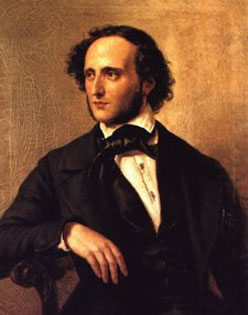
A few weeks ago I read an article in the New Yorker about Felix Mendelssohn written by a very excellent personality Alex Ross. A bit angry with the article, I wrote a response of sorts (mostly for my own piece of mind) to many if not all of Mr. Ross' claims and "facts". Below in italics you will find my response:

My curiosity was peaked whilst reading "The Youngest Master" by Alex Ross written for the New Yorker regarding the 200th birthday of composer Felix Mendelssohn. I was quite excited to read about a composer I am not completely familiar with (other than his body of work) written by someone whom I had always assumed was a semi-competent and knowledgeable writer on the subject. What I read instead was a brief, "Amadeus"-like outline for a hollywood movie script that dropped historical figures such as Goethe and especially Richard Wagner, who did in fact created quite a case against Mendelssohn and his music.

The anti-semetic Wagner was indeed partly responsible for the "suppression" of Mendelssohn's work (a well known fact), but the statement Mr. Ross makes concerning what he calls the "tortured relationship" between the two is simply trite. There is no historical evidence that Wagner ever "dreamed that his older collegue addressed him with du..." Mr. Ross is simply creating his own history in order to make his case that Mendelssohn was next to God.

This God-like admiration can also be taken from the end of Mr. Ross' third paragraph where he refers to Mendelssohn as "a musical Goethe". Mr. Ross is obviously a Goethe admirer as many people have been for generations, but this is unfortunately a failed attempt by Mr. Ross to appeal to another sect of know-it-alls within his circle of faux artists to explain Mendelssohn's prowess with the pen.

My previous knowledge of Mendelssohn's musical virtuosity had prepared me for the popular comparison to Mozart which are, by all accounts, completely out of touch with the art of music. Comparing the technical compositional ability of Mendelssohn to Mozart is like comparing apples and oranges: Two composers from different eras in time and artistic movement. If any comparison must be made, history will speak it: Mendelssohn will never be as revered a composer as Mozart if only due to the fact that Mozart was by all accounts a better composer and had a better understanding of his art, originality, and audience. Originality was not in the forefront of Mendelssohn's artistic process which could be one of many (if unfortunate) reasons his music is placed on a similar level to the likes of Franz Liszt and performed much more infrequently than the work of Mozart even post-Wagner.

My initial intrigue was as to whether or not Mr. Ross actually listens to the music about which he writes; or any music for that matter. Does he indeed have experience in using musical theory in practice or is he merely dropping vocabulary that he finds in conservatory text books, overhears at the superficial parties he attends, or pretends to comprehend at the concerts at which he falls asleep?

I have enjoyed many of Mr. Ross' articles in the past, but this one in particular left a bad taste in my mouth. Mendelssohn was indeed a master composer, but the treatment Mr. Ross gave to him in his article read like the New Testament. It is obvious that he places Mendelssohn on a very high pedestal, but is it at a deserving height in reality?


My little essay came mostly out of anger (I get quite emotional when it comes to music and especially concert music of which I have a pretty extensive knowledge). Mostly, I think I just wanted to prove to myself that I could still form a sentence and flex some sort of muscle at Mr. Ross' expense. The reality is that I still think Mr. Ross is an amazing writer with great appreciation for what he writes about and I will continue to read his shit.

Love,
Bill


Maestro

Sunday, March 8, 2009

WELCOME

Greetings and thanks for visiting FRACTAL MECHANISM.

Fractal Mechanism is a platform for artistic, scientific, humanist, and sometimes unusual subject matter that I happen to find interesting and care to share with YOU. Whether it be internet audio/video examples, text/articles/stories, or my own projects I will post it here if I feel like it.

Below I will explain who I am:

My name is Bill Trevaskis
I am a score and seven years so far
I live on an island off the coast of MAINE
I live with my incredibly awesome lady friend who goes by the name Courtney
I have 3 cats, 1 dog, and 1 hedgehog who are all named after musicians or songs
I like to experiment with sounds and musics on a regular basis
I have been in too many musical groups to count
Sometimes I play the guitar
I build and modify electronic instruments and toys
I own a house on this island and it rocks


not the first vocoder. not a vocoder at all actually but a VODER.